You get invited to a show. You have three weeks, a day job, and a table to fill. So you load the car with everything you own, set up next to somebody selling the same ornaments for two dollars less, and drive home at nine with a sunburn and forty dollars.
That is not a hustle problem. It is a decision problem, and decisions need numbers.
Nobody is lazy about this. Everybody does the same four things, in the same order, and arrives at the table still guessing.
You Google “what to bring to a craft show.”
Eleven listicles, all the same: bring a tent, bring change, bring a card reader, smile. Written for nobody in particular by someone who has never seen your work. Not one of them knows what you make, what it costs you, or who is walking into that gym on that Thursday.
You search the event itself.
A Facebook event with forty “interested.” A PTA page from last year that may or may not be this year. No vendor list, no turnout, no idea whether two hundred people come or two thousand — and those are completely different tables.
So you ask an AI.
And what do you ask it? “Help me prepare for a craft show” hands the same listicle back in a friendlier voice. Ask it to research properly and you get pages of sources, most of them about somewhere else, some of them last year, one of them a survey of artists dressed up as what buyers want. Now you have more to read and exactly the same decisions to make.
You fall back on a checklist.
Table cover, tape, bags, float. It feels like progress because things get ticked. But a checklist is a memory aid for decisions you have already made, and nobody ever handed you the decisions.
So you pack everything, price it on a feeling, and find out on the day. Then you do it again at the next one, because nothing told you which part went wrong.
None of that answers the questions the day actually turns on:
Is this table worth my Saturday, before I say yes to it?
Of everything I make, what does this crowd carry home?
How many of each — and can I even finish that in three weeks?
What do I charge here, when it is cash and a bounce house and not my online shop?
And what do I leave in the garage, so the table is not a jumble sale?
Those are not research questions. They are decisions, and every one of them needs a number you probably have not worked out yet. That is the actual job, and it is the part nobody hands you.
The system
The four questions a show actually asks
Four questions, in this order, each one handing the next a real number instead of a hunch. Answer them and the packing list writes itself — which is the right way round, and the opposite of how it usually goes.
1
What do I sell, and what does each one really cost me?
Real material cost, real cut time from your own logged settings, and true margin rather than markup dressed up as margin. This is the number everything downstream leans on.
2
Who is actually walking in, what should I bring, how many, and is this table worth my day?
Craft Show Prep, an AI research skillMember
A deep research pass on your specific event — the school, the church, that town, this year — then the harder half: working out what any of it means for your table, in your products, at your prices. Days of digging you would never actually do, and the part below is what it does with it.
Your machine hours against the calendar, so the plan is something your week can hold instead of something you find out about at 2am on the Thursday.
4
How did it really go, and what changes next time?
The Craft Show WorksheetMember
Checkboxes, a running tally and an order form that works on a phone at your table, then a 48-hour log: what sold out, what sat, what people kept asking for. That log is the input to your next plan.
Your true cost per piece decides your break-even. Your break-even decides whether the show is easy, possible or a stretch. Your machine hours decide the counts. What sold last time decides what you bring next time. That is a loop, and it gets tighter every show.
The hard half
Research is the easy part. Deciding what it means is not
Ask any AI to research a craft show and you get pages back. We tested that on a real report built from 108 sources. It kept three. The rest covered craft beer, highway sign manuals, an antique furniture show, and a survey ofartists passed off as buyer data — and it had the event on last year’s date. A hundred sources that do not change what goes in the car are worse than twelve that do, because now you have to dig the useful ones out yourself.
So the research is where this starts. What it does next is the work:
Opens every source behind a number. The worst errors are real sources misquoted, and they look perfect from the URL.
Checks what actually decides things against this year’s pages. Dates, fees, deadlines, whether spots are still open, indoors or out, tickets or cash. Event pages keep last year’s details up.
Labels every claim. Verified with a source, the organiser’s own figure, something you told it, or an assumption — with the value it used, so you can replace it.
Runs your break-even from your real costs and turns it into a pace you can picture: sales per hour, or households out of every ten.
Walks your catalog product by product against that crowd and that occasion. What comes, what goes on an order form with a sample, what stays home, and what to make more of.
Puts the unknowns at the top, not the bottom.The few answers that would change the plan, what it assumed instead, and what moves when you find out — so you know which two questions are worth sending the organiser.
That is a weekend of work you were never going to do, done properly, for one specific Thursday evening in one specific town.
A real one
What that looked like on one school festival
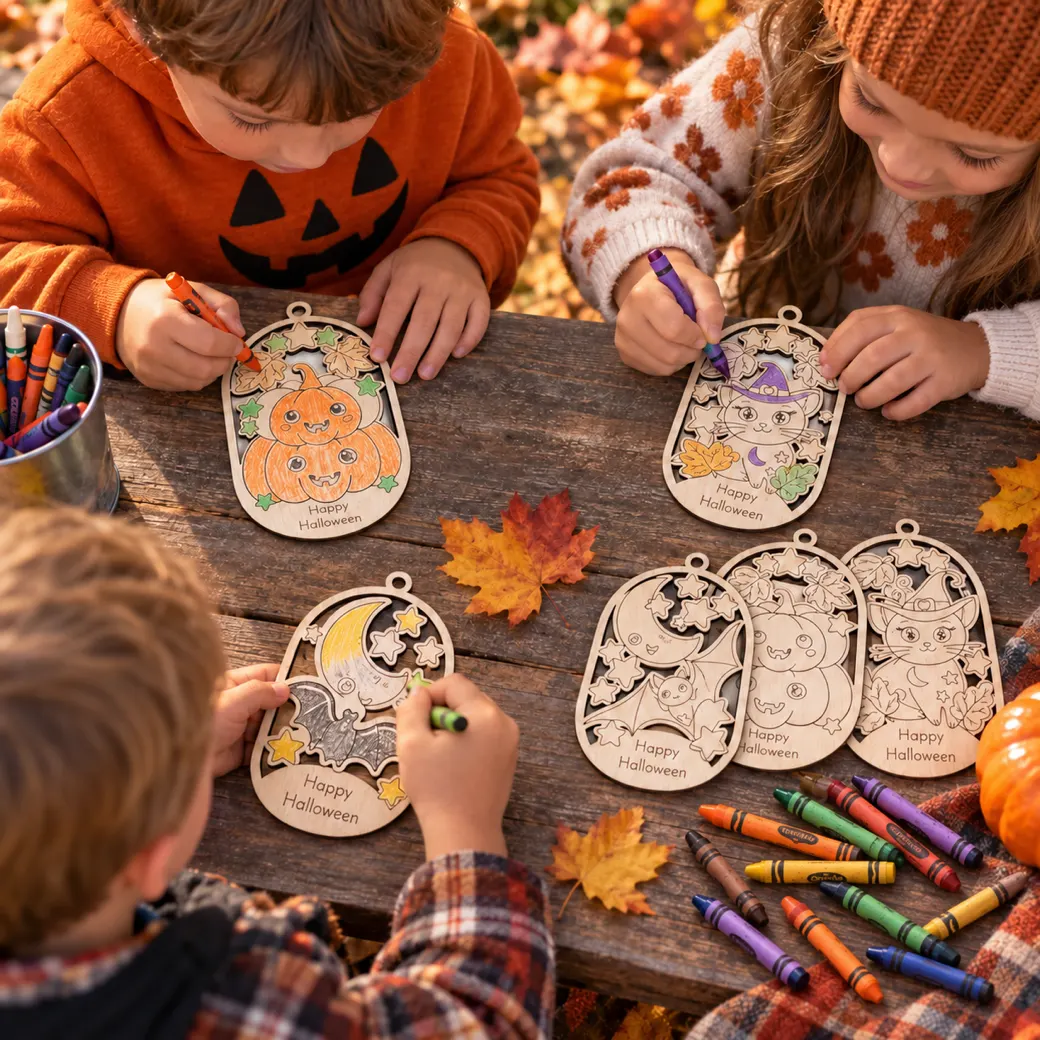
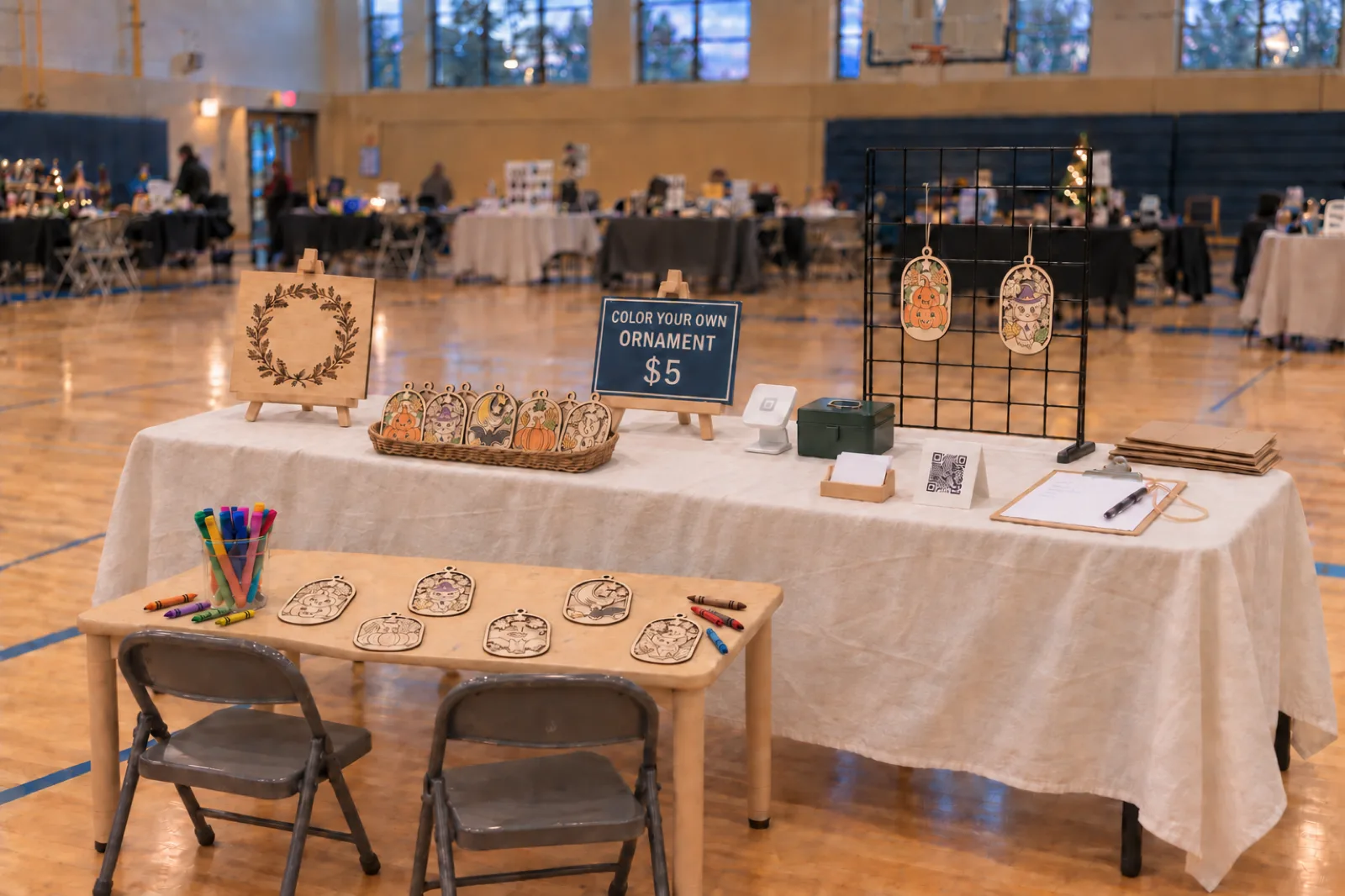
Ninety minutes on a Thursday evening, no booth fee, and a maker whose only ready stock was colour-your-own ornaments. The old way is bring everything, price it on a feeling, hope. Here is what the system said instead.
The traffic starter: something a child can finish in ten minutes, which buys you ten minutes with the parent standing next to them.
Who is coming. Not “families” — 588 students at that specific school, four in ten of them economically disadvantaged, at a school-night party nine days before Halloween. Price for the school, not the town.
What to bring. A $5 kids’ activity as the traffic starter, because a child with a $5 bill decides fast and the parent standing next to them has ten minutes to talk. The teacher gift went on an order form with one sample, not on the table as stock.
Whether it was worth it. No booth fee, so about $30 of real cost, which is nine ornaments. With her own time paid, 25 sales — one every three and a half minutes, which needs a second pair of hands. Easy on cash, possible with her time paid. Both answers, because they are different answers.
What to leave home. The marble boards and the corporate bundles. Lovely work, wrong crowd, heavy to carry past a bounce house.
What nobody knew yet. Whether she was selling her own work or running an activity booth for the PTA, which decides whether those fifty ornaments earn her anything at all. That went to the top of the page as a question for the organiser, not buried at the bottom as a disclaimer.
The same table, decided: one $5 offer a child can do in ten minutes, the gift line on an order form rather than stacked as stock, and nothing on it this crowd would not carry home.
Not one of those is a hunch. Every number carries where it came from, and every guess is labelled as a guess so she can swap in her own.
Why you can act on it
The part most tools skip
Nothing here invents a conversion rate. No “vendors see a 30% lift.” If a number cannot be sourced it is marked as an assumption, with the value it used, so you can see exactly what the plan is resting on and replace it with yours.
No account, no export cap, no watermark. Everything that gets a file onto the machine correctly, plus the pricing calculator that starts this whole chain. Your files never leave your browser. See all fourteen →
The business layer comes with the Hub: the Production Planner, the AI skills including Craft Show Prep, the worksheet you run the day from, the monthly live calls, and a room full of makers working the same weekends you are.
And you don’t have to run it yourself. Members can bring a show to a 1:1 and we do it together on the call — I run the research pass, you keep every decision. You leave with the plan and a worksheet already filled in for your event: your prices, your products, the questions to send your organiser, your dates. For a first show, that is usually the fastest way to find out whether the table is worth your Saturday.
Questions
Before you say yes to a table
Do I need to be technical to use the AI part?
No. You tell it the kind of event, the town, the date and what you make, and it does the research and hands you a plan. If you want it to know your catalog without typing it out, you can connect your shop or run it inside your Foundation — both of which we set up with you on a call.
Do I need another subscription for the AI?
No, and that is deliberate. It runs as a Claude skill and does its own research. We are not going to send you shopping for tools in order to use the thing we built.
Do the tools and the AI talk to each other automatically?
No, and we would rather say so plainly. The toolkit keeps your numbers in your own browser, which is exactly why nothing is uploaded — so you paste your cost per piece and your hours into the plan. Two numbers, once.
Will this work for a farmers market or a church bazaar?
Yes. A school festival, a juried art fair and a holiday bazaar can share a parking lot and have nothing else in common, so the plan is built per event type, from that event’s own pages and your own catalog. That is the whole point.
What if I have never done a show before?
That is the easiest case, because nothing has to be unlearned. You will get the questions to send the organiser before you commit, a bring list with counts, a break-even you can read, and a worksheet to run the day from. After the first one you will have your own numbers, and every plan after that is sharper.
Show season is now
Hope is a fine thing to feel on the drive over
It is a poor way to decide what goes in the car. Whatever you are chasing — rent money, your first wholesale order, a weekend that was worth leaving the house for — decisions made on facts get you there faster than decisions made on a feeling.